
Oils have been used for wound care for centuries, if not millennia. Less than 100 years ago, the ointments available today were not yet accessible. People had to use whatever they had on hand to care for wounds and scrapes.
I’ve compiled a list of carrier oils and essential oils known for their remarkable healing properties. These oils can be used to improve healing of wounds, cuts, and scrapes.
7 Best Carrier Oils for Wounds
Selecting the right carrier oils is as crucial as choosing the appropriate essential oils. I recommend purchasing organic oils to maximize the benefits of your blends.
Apricot kernel oil is an ideal ingredient for healing salves due to its richness in vitamins A and E and its close resemblance to the skin’s natural oils.
Hemp seed oil is known for its excellent moisturizing properties and rapid absorption into the skin. Additionally, it boasts a wealth of anti-inflammatory compounds, making it an ideal addition to healing balms.
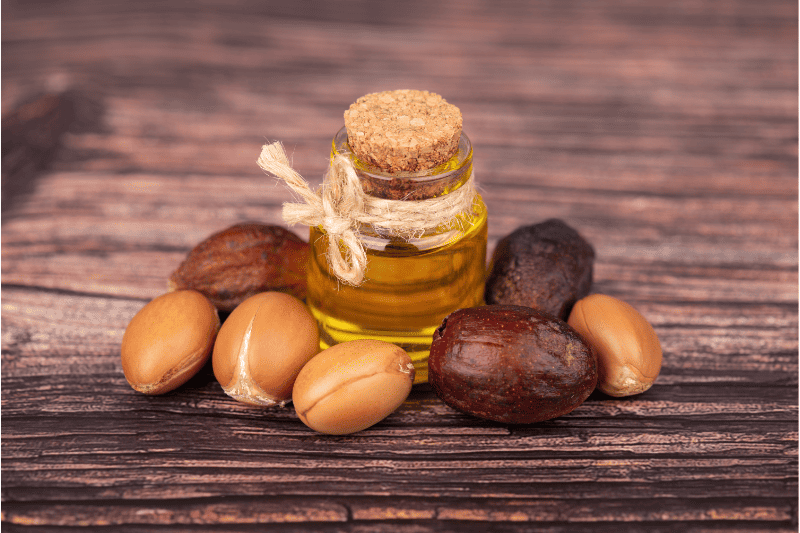
Argan oil, rich in vitamin E and essential fatty acids, is renowned for its profound moisturizing properties. It is a popular choice for soothing and treating inflamed skin, making it a versatile and effective skin remedy.
Pomegranate seed oil is a deeply penetrating oil known for its ability to enhance skin elasticity, stimulate collagen production, and contribute to the reversal of skin damage and scarring.
Rosehip oil is renowned for its high contents of vitamins A, C, and E, along with essential fatty acids. This oil is easily absorbed by the skin, and offers several benefits, including reducing discoloration and promoting collagen production. Thanks to its remarkable regenerative properties, rosehip oil is a valuable addition to healing balms.
Tamanu oil, while slow to absorb, is renowned for its richness in healing properties. This unique oil offers a wide range of benefits for the skin, making it a valuable addition to ointments.
Wheat germ oil is prized for its exceptional vitamin E content, which renders it effective in treating wounds, promoting the growth of new cells, and improving circulation. Due to its thick consistency, it is advisable to mix this oil with lighter carrier oils for better absorption.
12 Best Essential Oils for Cuts and Wounds
Essential oils contain concentrated properties from plants, making them highly effective but potentially irritating. Do not apply essential oils directly to wounds to avoid sensitization. It’s crucial to dilute them before applying it to skin. Here is a list of essential oils known for their remarkable restoring properties.
Tea tree essential oil boasts an impressive array of qualities, including antibacterial, anti-infectious, anti-inflammatory, antimicrobial, antiseptic, disinfectant, and cicatrizant properties. These attributes make it a valuable addition to oil formulations for wound treatment. Tea tree oil contains terpinene-4-ol, a potent antiseptic well-tolerated by the skin. Caution: Tea tree oil should never be ingested! Additionally, be mindful of its cineol content, which can be an irritant. When purchasing tea tree, opt for high-quality oil, since poor quality versions may contain more than 10% cineol, in some cases reaching all the way to 65%.
Bergamot essential oil boasts analgesic, antibacterial, antioxidant, antiseptic, and astringent properties. When applied topically, it effectively reduces inflammation and irritation. For topical applications, it’s advisable to use bergapten-free (FCF) bergamot oil to prevent photosensitivity reactions in the skin.
Roman chamomile essential oil offers a wide range of beneficial properties, including analgesic, antibacterial, anti-inflammatory, antimicrobial, and antiseptic qualities. Incorporating Roman chamomile oil into healing balms can significantly improve their effectiveness.
Frankincense essential oil is renowned for its superb healing properties. It offers a remarkable combination of attributes, including analgesic, anti-inflammatory, antioxidant, antiseptic, astringent, and cicatrizant qualities. Frankincense oil is often used to treat wounds as well as scars.
Myrrh essential oil is known for its valuable healing properties. It possesses a trifecta of beneficial qualities needed for wound healing, including being antiseptic, astringent, and anti-inflammatory in nature.

Geranium essential oil boasts a versatile array of qualities, including analgesic, antibacterial, anti-inflammatory, antiseptic, astringent, cicatrizant, and regenerative properties. It is a commonly used ingredient in wound care.
Lavender essential oil offers a range of valuable properties, including analgesic, antibacterial, anti-inflammatory, antimicrobial, and antiseptic qualities. Incorporating lavender oil to a healing balm will provide soothing benefits, accelerating the wound healing process.
Lemon essential oil is analgesic, antibacterial, anti-inflammatory, antimicrobial, antioxidant, antiseptic, astringent, and cicatrizant. When using lemon oil, opt for a steam-distilled variety to avoid photosensitivity issues. Caution: If using cold-pressed essential oil, ensure no more than a 2% dilution (18 drops per 1 ounce of carrier oil) and avoid sun exposure for 12 hours after application.
Rosemary essential oil is analgesic, anti-inflammatory, antimicrobial, antioxidant, antiseptic, and astringent. Caution: Do not use it if pregnant or nursing, not safe for use on children under the age of 6. Do not use more than 4% dilution (36 drops per 1 ounce (2 tablespoons)).
Helichrysum essential oil is celebrated for its remarkable properties, including being antibacterial, anti-inflammatory, and antioxidant. It has earned the nickname “Immortelle” for its extraordinary ability to regenerate and heal wounds and scars.
Yarrow essential oil is known for its astringent and anti-inflammatory properties. Throughout history, it has been a trusted remedy for the treatment of wounds.
Fir Needle essential oil boasts an impressive array of qualities, including being analgesic, antibacterial, anti-inflammatory, antiseptic, and astringent. Notably, it is safe for use in children.
Macerated Oils
Aloe vera oil possesses potent healing properties. This oil is achieved through the maceration of aloe vera in a carrier oil, typically soybean oil. It is renowned for its analgesic and anti-inflammatory qualities.
Calendula oil is produced by macerating calendula flowers in a carrier oil. The resulting oil is known for its remarkable healing properties, making it suitable even for the most stubborn and severe wounds.
Juniper berry oil is created through the maceration of juniper berries in a carrier oil. This oil is renowned for its potent healing properties and is commonly used for alleviating itching, treating wounds, soothing scratches, and addressing back problems. Here’s a simple method for making it:
Juniper Berry Oil
Ingredients:
- 2 cups of juniper berries (use more for extra potency)
- 2 cups of carrier oil
Steps:
- Begin by soaking the juniper berries in water overnight.
- After soaking, mix the berries with the carrier oil.
- Simmer the mixture for a couple of hours, taking care not to let the berries burn.
- Finally, strain the oil and store it in a dark bottle.
DIY Oil Blends for Wounds, Cuts, and Scrapes
Here are a couple of DIY wound blend ideas for you to keep on hand. Simply combine the oils and store the blend in a dark glass bottle for future use.
Rapid Healing Oil Blend
- 3 tablespoons rosehip oil
- 1 tablespoon wheat germ oil
- 10 drops frankincense essential oil
- 10 drops myrrh essential oil
- 10 drops lavender essential oil
Antiseptic Oil Blend
- 4 tablespoons hemp oil
- 10 drops helichrysum essential oil
- 10 drops tea tree essential oil
- 20 drops lavender essential oil
Healing Blend for Children
- 3 tablespoons rosehip oil
- 10 drops fir needle essential oil
- 10 drops lavender essential oil
- 5 drops lemon essential oil
To learn more on how to treat wounds naturally at home, continue reading Best Garden Plants for Wound Care and Best Medicinal Plants in the Wild.
Works Cited
Anthis, Christina. The Beginner’s Guide to Essential Oils : Everything You Need to Know to Get Started. Emeryville, Ca, Althea Press, 2019.
Chevallier, Andrew. Encyclopedia of Herbal Medicine. New York, New York, Dk Publishing, 2016.
Dian Dincin Buchman. Herbal Medicine. Tiger Books International PLC, Twickenham, 1993.
Houdret, Jessica. Home Herbal Doctor. Anness Publishing Ltd, 2009.
Minetor, Randi. Essential Oils of the Bible : Connecting God’s Word to Natural Healing. Berkeley, California, Althea Press, 2016.
Press, Sonoma. Essential Oils & Aromatherapy, an Introductory Guide: More than 300 Recipes for Health, Home and Beauty. Arcas Publishing, 1 Dec. 2014.


